
Essential Do’s and Don’ts of CPR for Caregivers: A Comprehensive Guide
febrero 24, 2026
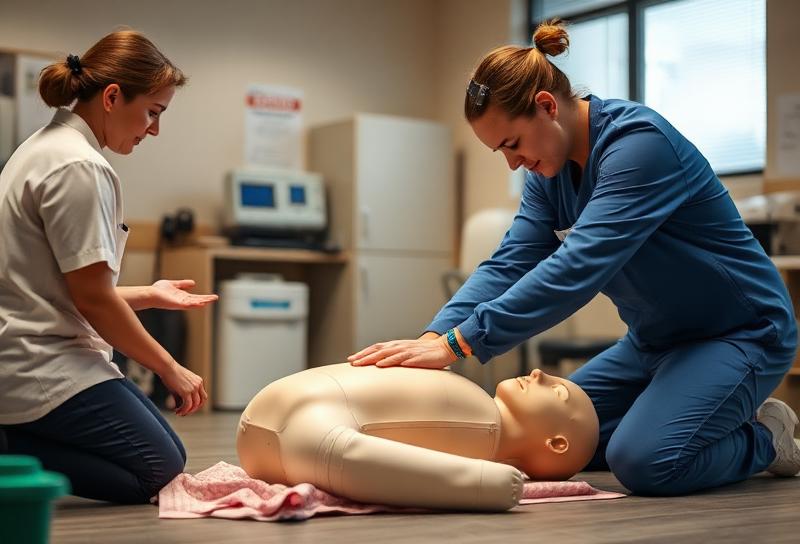
Cardiopulmonary resuscitation (CPR) is more than just a medical procedure; for a caregiver, it is the most critical life-saving skill in their arsenal. In a caregiving environment, where clients often have pre-existing heart conditions or mobility issues, the risk of a sudden cardiac event is higher than average. This comprehensive guide delves into the essential do’s and don’ts of CPR, providing you with the confidence and precision needed to act when seconds count.
The Vital Importance of CPR in Home Care
When the heart stops beating, oxygenated blood stops flowing to the brain and other vital organs. Permanent brain damage can begin in as little as four minutes, and death can occur shortly after. CPR mimics the heart’s pumping action, keeping blood moving until professional medical help arrives with a defibrillator. For caregivers, being “CPR-ready” isn’t just a certification—it’s a commitment to the safety of those under your care.
The Do’s: Best Practices for Effective CPR
1. Do Maintain Active Certification and Knowledge
Techniques evolve. What was standard ten years ago may be outdated today.
- Recertify Every Two Years: Organizations like the AHA or Red Cross update their guidelines based on the latest survival data.
- Practice Visualizing: Mental rehearsals of the steps can help reduce panic during a real emergency.
2. Do Assess Safety and Responsiveness First
Before you touch the victim, ensure the “Scene is Safe.” You cannot help if you become a victim yourself (e.g., in cases of electrocution or gas leaks).
- “Tap and Shout”: Tap the shoulders firmly and shout, “Are you okay?” Check for breathing or gasping for no more than 10 seconds.
- Call 911 Immediately: If you are alone, call first. If someone else is there, point at them and say, “You, call 911 and get an AED!”
3. Do Focus on High-Quality Chest Compressions
This is the most important part of “Hands-Only CPR.”
- Positioning: Place the heel of one hand on the center of the chest and the other on top, interlocking fingers. Keep your elbows locked and shoulders directly over your hands.
- Depth and Rate: Push down at least 2 inches but no more than 2.4 inches. Aim for 100-120 beats per minute (the tempo of “Stayin’ Alive”).
- Full Recoil: Let the chest come all the way back up between pushes. This allows the heart to refill with blood.
The Don’ts: Common Mistakes to Avoid
1. Don’t Delay Starting Compressions
Panic often leads to hesitation. If you aren’t sure if they have a pulse, start compressions anyway. The risk of doing nothing far outweighs the risk of performning CPR on someone whose heart is still beating.
2. Don’t Stop Until Handover
Do not stop CPR unless the person starts breathing, an AED tells you to stop for analysis, or professional medical help takes over. If you get exhausted, try to switch with someone else every 2 minutes with minimal interruption.
3. Don’t Forget the AED
An Automated External Defibrillator is the only thing that can “reset” a heart in certain rhythms. If one is within reach, use it immediately. The machine will guide you with voice prompts—you cannot “mess it up.”
Caring Heart Homecare Advantage
As the leading homecare agency in Torrance and serving all of LA County, Caring Heart Homecare puts safety first. Every single one of our caregivers undergoes rigorous CPR training and regular skill assessments. When you trust us with your loved ones, you are trusting a team that is prepared for every eventuality.
Conclusion
Mastering CPR is a journey of continuous learning. By following these do’s and don’ts, you provide the best possible chance of survival. Always remember: your actions, however imperfect, are better than no action at all. Stay trained, stay calm, and save lives.